Writer Ajon Singh shares Skyler Gisondo couldn’t see himself in the Primetime role of a struggling actor baiting predators, until he was convinced to ‘unpack his baggage’
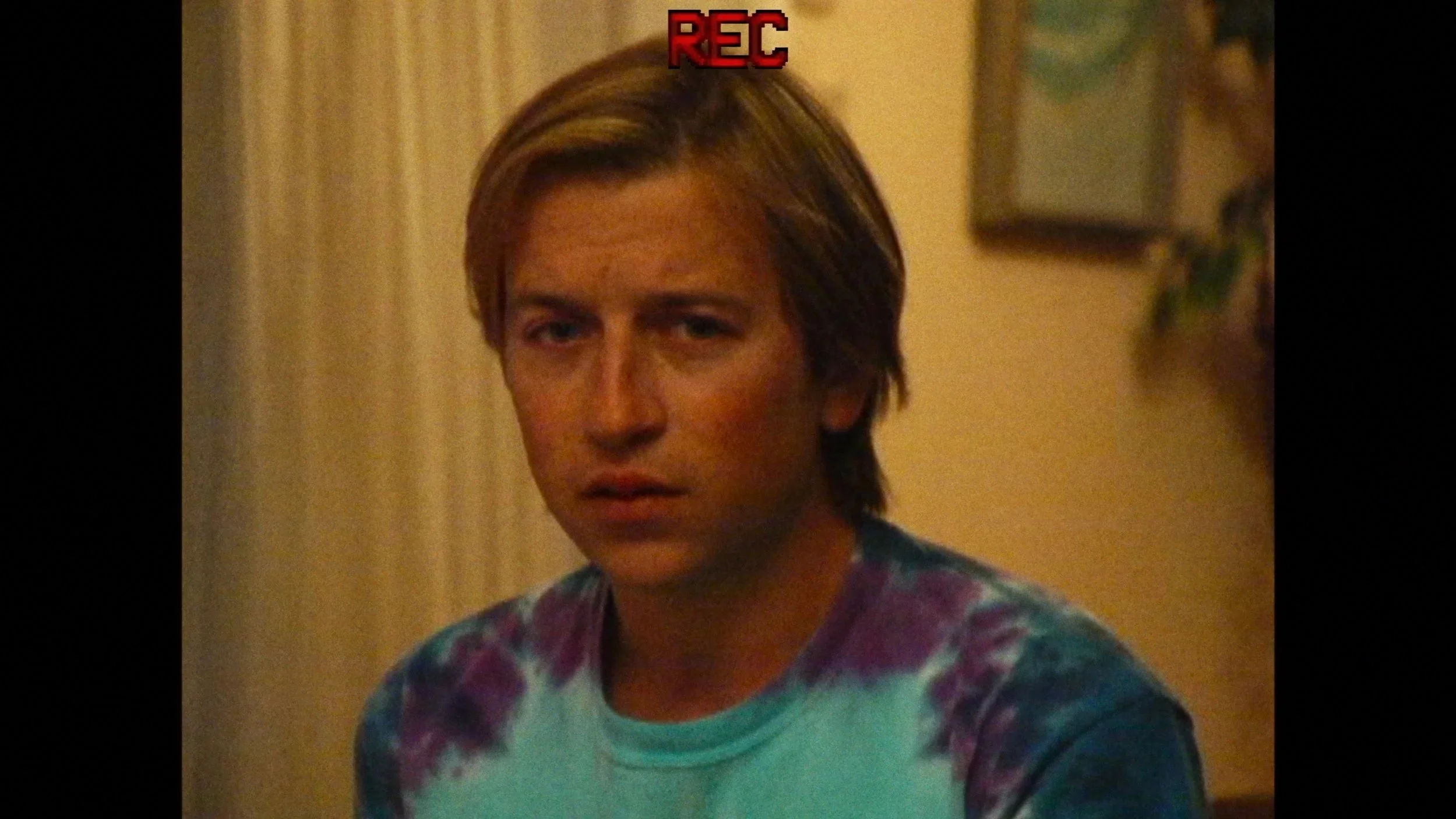
Skyler Gisondo in Primetime (image: A24)
Everybody who is anybody is talking about Robert Pattinson this year. The star is having an Anne Hathaway run in 2026, with films including Kristoffer Borgli’s The Drama, Christopher Nolan’s The Odyssey and Dune: Part Three all releasing, not to mention the constant headlines surrounding his all-consuming filming schedule for The Batman: Part II. But it’s his idiosyncratic turn as To Catch a Predator host Chris Hansen in Primetime that has stirred up controversy, mainly due to the various public reactions from Hansen himself, both deriding the portrayal while still encouraging people to go and see it.
Pattinson, who is also a producer on the film, told Popcorn Podcast he and the filmmakers “were going for a very particular angle on the character. It’s not just about Chris Hansen, it’s about this confluence of events, and a very particular tone.”
He’s right. Primetime is less about Hansen and more a voyeuristic-style examination of the people in his orbit and what is set in motion through the drive for ratings, the need for validation and a murky moral crusade. It’s an exaggerated satirical story based on a 2009 Esquire article titled Tonight on ‘Dateline’ This Man Will Die. But what all that noise threatens to overshadow is the outstanding performance of Pattinson’s co-star, Skyler Gisondo (Superman, Booksmart, Focker-in-Law). Gisondo is garnering critical acclaim as Dan Plum, an actor hired to bait the predators targeted by the series who struggles with the ethics of the concept. Dan is our way in to the catastrophic events that led to the eventual cancellation of To Catch a Predator, and by all accounts Gisondo knocks it out of the park.
Popcorn Podcast sits down with Primetime writer Ajon Singh, who worried his genre-defying darkly comic thriller might never get made, to talk more about Gisondo’s sensational turn. Singh also shares how Hansen’s statements were received by himself and director Lance Oppenheim (You Can See Everything), what he wants Hansen to know and reveals the added scene Gisondo suggested that changed the ‘hopeless’ ending.
Leigh Livingstone: I saw the film at Toronto International Film Festival, a month or so back, and the reception was absolutely fantastic, and it’s such a great film. How would you categorise Primetime? Because it’s definitely not a biopic…
Ajon Singh: I think it's difficult to categorise, which is kind of what boxed me out of the industry for a long time, but I think, probably, I would call it a dark comedy thriller. But you know, it's genre agnostic, as they say, I suppose, but that is the sense with all my writing.
LL: It defies expectation!
AS: Yeah. I mean, I hope so. But that is how I would describe it.
LL: I understand you worked on spec while trying to get it off the ground for such a long time. Why did you feel so strongly about investing in this story?
AS: Well, first of all, no one would pay me to write it. I couldn't find anyone to believe. I mean, I had so little going on in my career. I'd been writing for many years, but I don’t think I had the goodwill. So you know, I believed in this script so much because I grew up watching the show, and I believe there was a generation of people that grew up with the same sort of influences that I did. It was one of the highest rated things on television, so I knew that had to be the case. Even the target demographic of the show was middle aged white women, according to Chris Hansen, and I was only 10 years old at the time, so I was actually not the target demo, but he had such a huge base.
I was so fascinated by the show, and I was a kid, and I would remember the predators’ names. It was such a weird way to use my mental real estate at that age. But fast forward all these years later, I found out how the show ended, which was obviously the suicide of the DA, who they caught in the investigation, and I thought that was such a spectacular sort of… well, not his death per se, but kind of the way they cornered him, and the way entertainment and law enforcement began to blend. I thought it was a really interesting third act for the film. So once I had a vision for that and then also, obviously, the Chris Hansen role was very meaty and there was a lot to do there. But there was this character who is a 20-something struggling actor in Hollywood, who ended up being Dan Plum, played by Skyler Gisondo. I found that character in particular to be very, very magnetic. And I had a vision for it and I wrote it.
LL: I’m just dying to talk about Skyler Gisondo. That’s it. That’s the question. Just talk to me about Skyler Gisondo. He’s so great in this film. He’s absolutely spectacular. Tell me about casting him and the vision that you had for that role.
AS: Well, first of all, I was just on a Zoom with him. He was nominated for a Gotham Award and we were Facetiming, celebrating. I was celebrating him. He is one of the most incredible actors working. He is such a light. He is so down to play and do… if something improv would start coming alive in the scene, he would start to experiment. But in the casting, to answer your question, he was actually not interested. He didn’t want to do the movie when we originally sent him the script, and I think he believed that maybe he was too different from the character and he was too old for it. I think the plea that Lance made and that I was trying to make was that Skyler was a child actor. He’s been acting since the aughts and we were suggesting that there was a way for him to sort of unpack that baggage by doing this role about this adult who is being forced to act like a child. [The character] Dan had these dreams of somehow making it in Hollywood and the only things he’d ever been in were Toys R Us commercials, and we were like, ‘Skyler, you’ve lived that. You were doing those kinds of commercials and no one can speak to this character better than you can’.
Once he started to see the vision, he signed on enthusiastically and he absolutely nailed it. I mean, he’s such a profoundly good performer and he’s a dear friend. I love him.
LL: He knocked it out of the park and him being worried about being too old for the role is almost perfect for that role, isn’t it?
AS: Exactly. Yeah, there’s a great irony in it all.
LL: I have to ask about the reaction from Chris Hansen, and I’m sure you’re already probably sick of talking about him because it’s not really about him, but he is front and centre. This is such an exciting time for you, and obviously the reception from the public has been incredible, but then you've got Chris Hansen coming out and saying all the things that he's been saying – how did that make you feel?
AS: I mean, truthfully, there was a part of us, and maybe Lance and I are just delusional, but we really expected him to like the film [laughs]. We expected him to like the portrayal. First of all, you have Batman playing you and you have this strange, kind of cool performance. It's dramatised, but we wanted it to feel really fun and I think we accomplished that. The interesting thing about his response, truthfully, has been that every time he talks about the movie or has strong opinions about it, he often ends his comments by saying: ‘You should go see the film.’ He’s like, ‘Make up your own mind.’ So he’s promoting the film. He’s telling people to go see it. I figure even if we’re in the situation where he has these strong opinions, he’s promoting it, so I suppose we’re working together on some level.
He should know that I'm not trying to moralise about the show because I would be a hypocrite. The reason I even wrote it in the first place is because I was a fan of the show. That being said, I wanted to put a sort of microscope to that cultural moment as to why it was so popular and what is it about society that treated it like… I mean it was one of the highest rated things on television, so maybe we can have a nice conversation one day. I don’t know.
LL: One day. When this is all dies down! I guess that’s what Lance adds to the project, isn't it? That documentarian kind of eye that's not really adding moral judgement, just presenting everything for you…
AS: Exactly. I was so thrilled when Lance and I first met because so much of this movie is surveillance, and it's looking at the line between objectivity and subjectivity and reality and surreality. Lance was the perfect artist to do that. I could not be prouder of the job he did on this film. He’s just amazing.
LL: Was there anything that changed from the film’s conception to the final product that you really fought to keep in there? I know a lot of things massaged and changed as Rob came on board, and obviously as you start filming you have all the logistical constraints, but was there something that you really felt strongly about that you couldn't keep in there?
AS: It's funny, for the most part, the three of us – me, Rob and Lance – were aligned. Oftentimes, there is a sort of arrogance as a writer that you know some people want to come in and cut scenes, and you allow them to, but oftentimes they find their way back into the movie because all parties realise that it’s essential. As the writer, this is where the arrogance comes in. You spent the most amount of time building the thing; you built the tower, so you also understand if you take one Jenga block out, the whole tower comes down. There was one line that comes to mind that Lance and I would always talk about, which is when Del [Harvey] talks about – I’m going to paraphrase it – but she’s like, ‘You need to smile so they can hear it in your voice.’ She’s talking about speaking to the predators. That's a real line from the show where the real Del said that. For some reason, we would always discuss whether it should be in the movie. I always found that to be a weird perfect metaphor for the entire film. You need to smile so they can hear it in your voice. There’s something poetic about that, but yeah, that line weirdly was always on the chopping block. It's been an amazing collaborative process, though. Genuinely.
LL: I read that test audiences thought the original ending was too bleak. What was the original ending? Because the ending I saw was not exactly uplifting!
AS: The original ending was just Rob saying: ‘What would have happened if I wasn't here?’ You just ended the film on that line by Chris Hansen.
LL: Oh, okay…
AS: Lance and I always wanted it to feel like the ending of Chinatown. But for some reason, when we watched it with an audience, it felt hopeless, and we didn't want it to feel hopeless. That’s when we all started talking and Lance and Skyler were both going through something at the time, and Skyler had the bright idea to be like, ‘What if Dan gets a SAG [Screen Actors Guild] card?’ I was like, ‘It’s perfect!’ I went off and wrote the scene, and we were quickly off to the races shooting that. But it was interesting to us, if Dan’s character is all about the idea of a dream and it’s about the death of a dream, you know, you get the thing you always wanted and it doesn't feel the way you wanted it to feel. When that thing comes back and you get that siren song, the SAG card, the thing that you always wanted, are you back in or are you out? Are you an actor? Is this the final line of the movie? Which we were very satisfied with.
LL: I’d actually forgotten that it ended that way. That was a little bit more uplifting than cutting it with Rob.
AS: Yeah, well, maybe the Rob stuff… it’s so heavy.
LL: I just want to say before I go… I’m a ‘90s kid as well, so I am familiar with this, and it seems like you did make it for the ‘90s kids, but thank you for the Jerry Maguire jumpscare with Jonathan Lipnicki!
AS: [Laughs] Of course, of course.
LL: And Alex Winter. You’re terrorising all the ‘90s kids!
AS: Oh, absolutely. That’s what we do [laughs].