Robert Pattinson opens up about playing Chris Hansen in Primetime
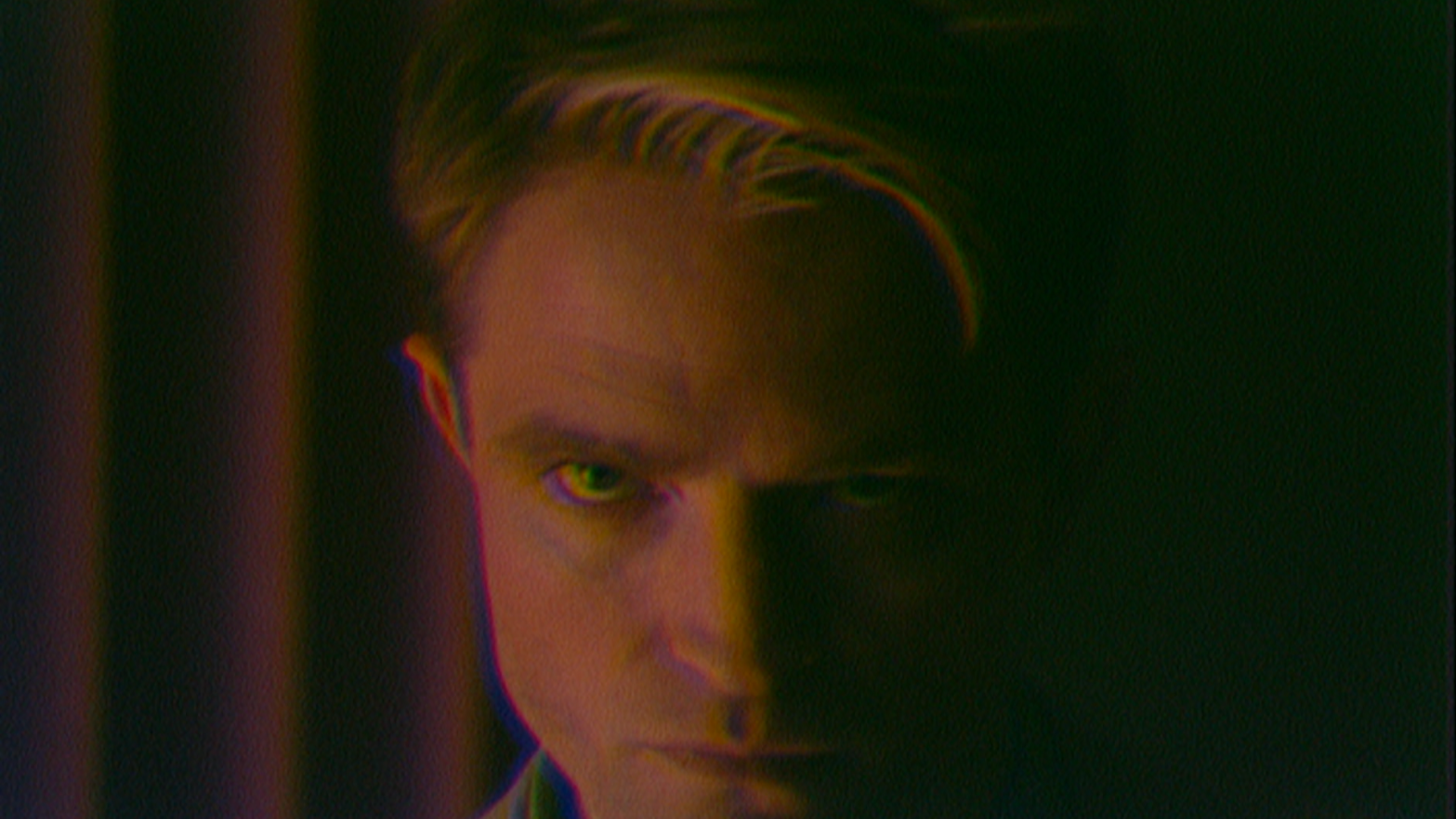
Robert Pattinson in Primetime (image: courtesy A24)
Why Robert Pattinson took on one of the most controversial roles of his career
“I never set out to make a movie about Chris Hansen specifically,” Robert Pattinson (The Drama, The Odyssey) tells Popcorn Podcast and other journalists at a press conference ahead of Primetime’s US release. “You look at the context he was in, the start of reality TV, this early version of the is-it-news-or-is-it-entertainment argument… his presence on the show is fascinating in its own right.”
Early reception to director Lance Oppenheim’s (You Can See Everything) film, in which Pattinson plays To Catch a Predator host Chris Hansen, has been divisive, much like the original series. Some critics have said it suffers from the same moral pitfalls as the TV show it skewers. While the current Rotten Tomatoes consensus is that it “interrogates the slippery boundary between justice and lurid spectacle with crackling style and an outstanding Robert Pattinson”.
TV series To Catch a Predator ran from 2004 to 2007. In it, Hansen confronted accused predators at a staged home where they arrived expecting to meet children they had been chatting with online. Those ‘children’ were, in fact, members of Hansen’s team posing as teenagers. Primetime is set during the build-up to the deadly fall-out of one particular sting operation which subsequently had the series cancelled.
The divisiveness of the A24 film, which has an Australian release date of October 29, comes down to one main question: does turning the fear of child grooming and predatory behaviour into entertainment undercut the mission behind it?

Pattinson says he has seen that split first-hand. “I do remember having the same reaction years ago when someone would play one of the clips,” he says. “There was this split, even in my friend group, of some people… having a little bit of like a fratty reaction to the clip… you want to laugh at it because it’s kind of the scariest thing you could imagine, and then my other friends were repulsed by the entire set-up.”
Speaking about the juxtaposition of the concept’s initial intention and what it eventually became, as well as the focus of his film, Pattinson says: “I think that's the interesting thing about the entertainment industry: at a certain point of viewership, or of how much money something is making, it no longer matters what the subject is. You’re just a hit and you have to operate as one. That’s what draws me to characters who are stuck between a rock and a hard place.”
Hansen himself wasn’t consulted on the making of the voyeuristic, retro-style true crime film and has been vocal about his depiction, publicly calling Primetime “bizarre” and “detached from reality”.
Pattinson says the film was never meant to be a straight portrait. “What we were trying to get in the performance was... trying to play the audience’s reaction to him and desire for what they want him to be rather than just playing the guy.
“We were going for a very particular angle on the character. It’s not just about Chris Hansen, it’s about this confluence of events, and a very particular tone, like Lance's documentaries. It’s just not a traditional biopic.”
The star adds that the host is what sets this story apart from others tackling the subject. “There have been other shows about the same subject, but none of them had a Chris Hansen – someone with this massive cross-cultural, pop-cultural impact for 20 years and this strange second life on the internet.”
Pattinson developed Primetime as a producer for years, intending someone else to star as Hansen. He decided to take the role himself on the same day he signed on to The Drama, a decision that forced him to rework two years of scheduling across three overlapping projects, including The Batman: Part II.
“I was thinking about every movie at the same time and letting little elements seep into each other,” Pattinson says. “The whole way through – with The Drama and Die My Love before that – I was developing this with Lance and [writer] Ajon [Singh] almost every day, and it went through so many different configurations.”